-fotor-bg-remover-20251211141935.webp)
-fotor-bg-remover-20251211143525.webp)
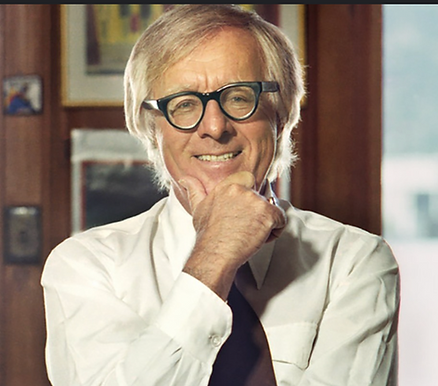
Ray Douglas Bradbury was born on August 22, 1920, in Waukegan, Illinois. Growing up in a small Midwestern town, Bradbury was immersed in an idyllic environment that would later inspire many of his stories, such as Dandelion Wine. He developed an early love for books, drawing inspiration from authors like Edgar Allan Poe, Jules Verne, H.G. Wells, and L. Frank Baum.
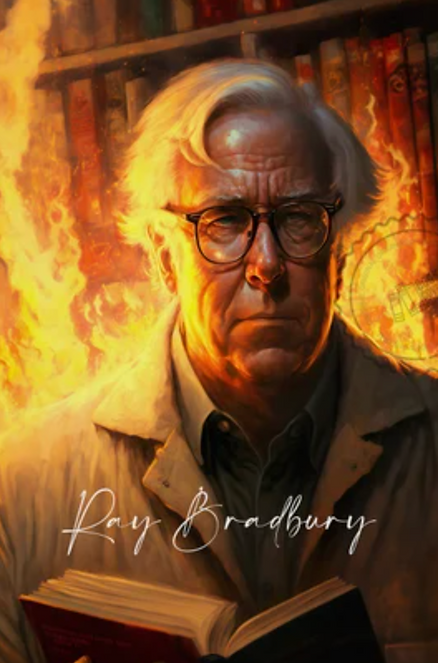
In 1934, Bradbury’s family moved to Los Angeles, where he immersed himself in the world of film, science fiction, and fantasy. He spent countless hours at the local library, voraciously reading and dreaming of becoming a writer. Encouraged by his love of storytelling, Bradbury began writing his own short stories in his teenage years.
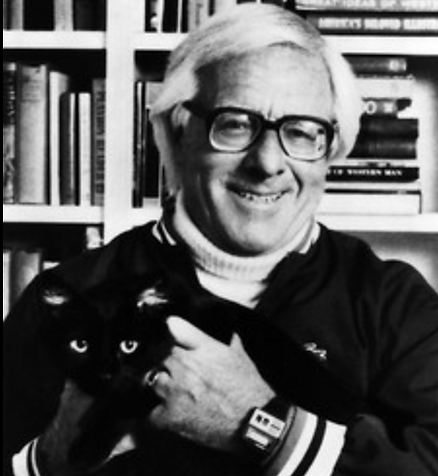
Bradbury never attended college, believing libraries to be his “true university.” He supported himself by selling newspapers while honing his craft. His first professional sale was "Pendulum," co-written with Henry Hasse and published in 1941 in Super Science Stories.
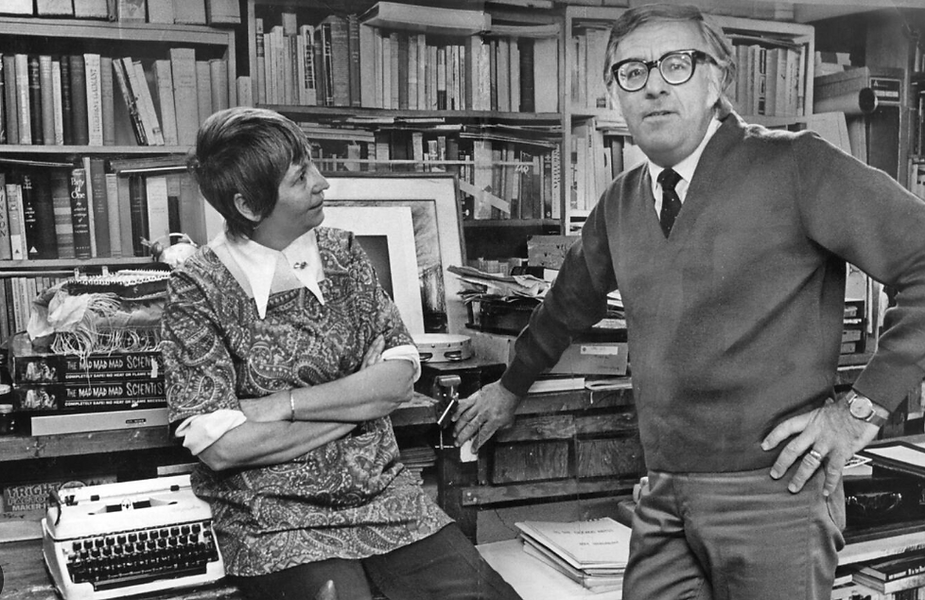
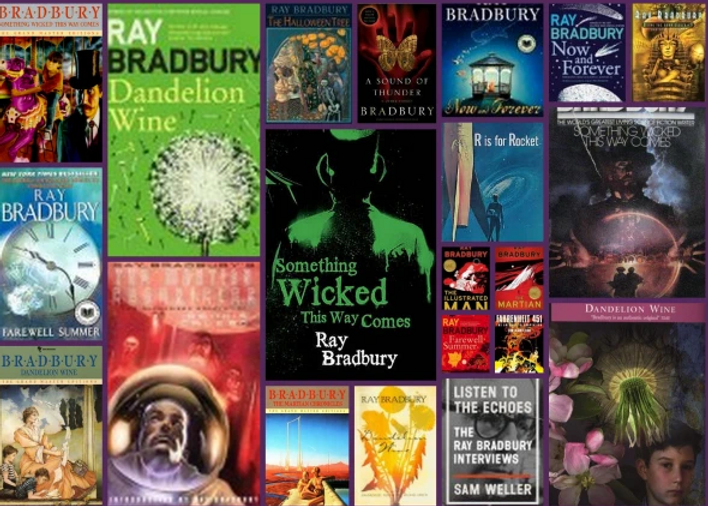
In the early 1940s, he began contributing regularly to pulp magazines like Weird Tales and Amazing Stories, crafting short tales that blended science fiction, fantasy, horror, and humanity. His breakout came in 1947 with the publication of Dark Carnival, a collection of short stories that introduced readers to his distinct voice—both whimsical and haunting.

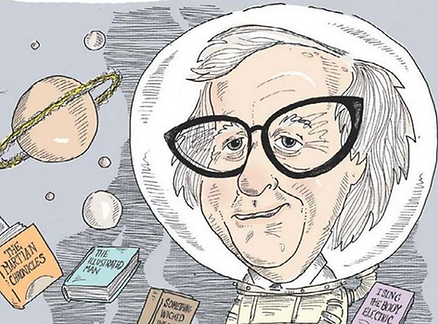
In 1950, Bradbury achieved critical and commercial success with The Martian Chronicles, a series of interconnected stories that explore humanity’s colonization of Mars. Rather than focusing solely on technological aspects, Bradbury infused the book with deep human themes: the consequences of colonization, environmental destruction, and the fragility of human relationships.
The Chronicles showcased Bradbury's poetic prose and his ability to use science fiction as a lens for examining societal issues. It influenced countless writers and became a cornerstone of modern science fiction.
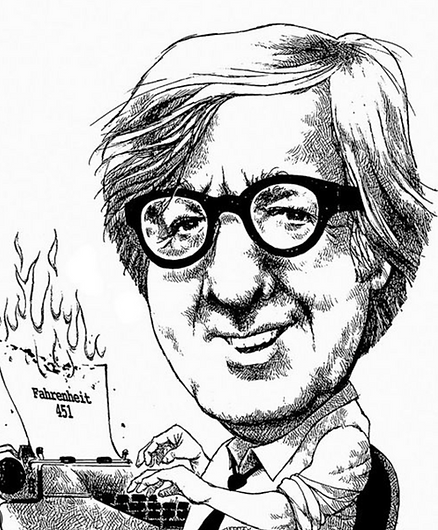
Bradbury’s most famous work, Fahrenheit 451, was published in 1953. This dystopian novel imagines a future where books are banned, and “firemen” burn them to suppress free thought. The story follows Guy Montag, a fireman who begins to question his role in society and rebels against the oppressive regime.
Fahrenheit 451 became a seminal work of literature, exploring themes of censorship, authoritarianism, and the dangers of technological distraction—issues that remain relevant today. Bradbury claimed the novel was less about censorship and more about the impact of television on reading and critical thinking, reflecting his fears of cultural homogenization.

Bradbury’s versatility as a writer allowed him to transcend genres. In works like Something Wicked This Way Comes (1962), he delved into dark fantasy and horror, crafting a chilling yet nostalgic tale about the loss of innocence. Dandelion Wine (1957) showcased his lyrical, semi-autobiographical exploration of childhood in the Midwest.
Through these works, Bradbury demonstrated his unique ability to blend the fantastical with the deeply personal, creating stories that resonated emotionally with readers.
Bradbury’s vivid imagination extended beyond the written word. He worked as a screenwriter on several projects, most notably contributing to the script for Moby Dick (1956), directed by John Huston. Many of his stories were adapted for television, including episodes of The Twilight Zone and Alfred Hitchcock Presents.
In the 1980s, Bradbury hosted his own anthology series, The Ray Bradbury Theater, which adapted 65 of his stories. He also ventured into theater, adapting his works for the stage and demonstrating his love for storytelling in every medium.
Bradbury was instrumental in elevating science fiction and fantasy to literary art forms. Before his time, these genres were often dismissed as mere escapism. His poetic prose, exploration of profound human themes, and focus on the emotional and moral aspects of speculative fiction helped legitimize the genres in the eyes of critics and readers alike.
Ray Bradbury’s impact on science fiction, fantasy, and literature is immeasurable. He inspired generations of writers, filmmakers, and creators, including:
Bradbury continued writing into his later years, producing novels, short stories, plays, and essays. He received numerous awards, including a Pulitzer Prize Special Citation in 2007 for his contributions to literature.
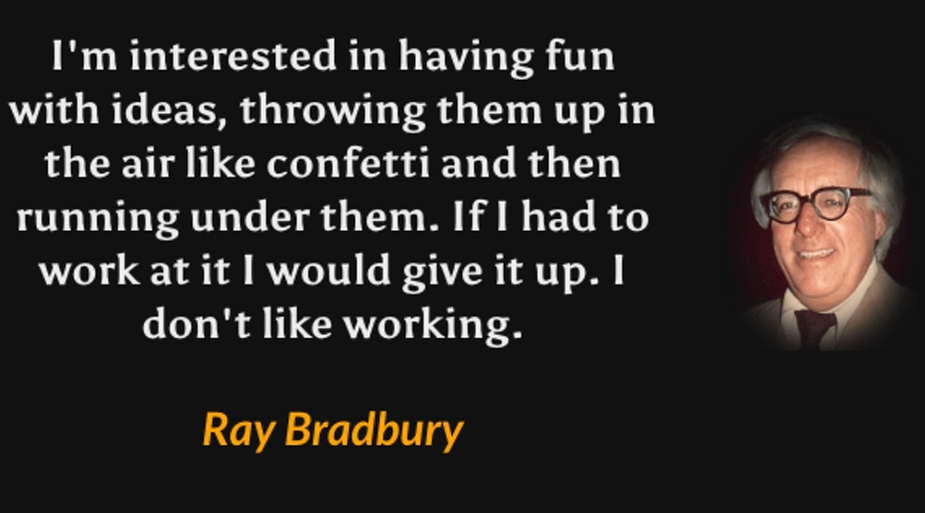
Despite his success, Bradbury remained humble and deeply connected to his roots. He often spoke about his love for libraries and the importance of imagination in shaping the future.
Ray Bradbury passed away on June 5, 2012, at the age of 91. His legacy lives on in his works, which continue to inspire readers and creators around the world.
Bradbury’s influence extends far beyond literature. His work has shaped:

Ray Bradbury was more than a writer; he was a dreamer who invited the world to dream with him. From the red sands of Mars to the dystopian streets of Fahrenheit 451, Bradbury’s works transcend time and genre, speaking to the heart of what it means to be human.
His legacy endures not only in the stories he wrote but also in the countless lives he inspired to imagine, create, and believe in the power of storytelling.
Ray Bradbury’s poetic sensibility permeated all his works, from his prose to his standalone poems. He once said, “Science fiction is the art of the possible; poetry is the art of the impossible.” This blend of the possible and the impossible defined his poetic voice and added depth to his imaginative storytelling.
Even when Bradbury wasn’t writing poetry explicitly, his prose was deeply infused with poetic elements. His writing was known for its:

Bradbury wrote and published standalone poems throughout his life, reflecting his deep love for the form.
Ray Bradbury brought a few innovative elements to his poetry that set him apart:
Here are a few examples that showcase his poetic voice:

Bradbury’s poetic style influenced many creators, particularly in the way they approached storytelling.
Ray Bradbury’s poetry, much like his prose, was a celebration of humanity, imagination, and the infinite possibilities of existence. By blending science fiction with lyrical beauty, he redefined how these genres could interact, inspiring readers and creators to dream bigger and feel deeper. His poetic voice continues to resonate, reminding us that even in a rapidly advancing world, there is always room for awe, wonder, and the timeless art of storytelling.
Ray Bradbury is best known for his fiction, but one of his most famous poems is “If Only We Had Taller Been.” This poem captures his profound sense of wonder about space exploration and humanity's eternal quest for the stars. It was written to honor the Mariner 9 spacecraft’s mission to Mars in 1971 and was later recited at various NASA events, cementing its place as a significant piece of space-inspired literature.
The fence we walked between the years Did balance us serene.
It was a place half in the sky Where, in the green of leaf and promising of peach, We’d reach our hand to touch and almost touch the sky, If we could reach and touch, we said, 'It would teach us, not to, never to, be dead.'
We ached and almost touched that stuff;
Our reach was never quite enough.
If only we had taller been,
And touched God’s cuff, His hem,
We would not have to go with them
Who’ve gone before, Who, short as us,
stood as tall as they could stand And hoped
by stretching tall to keep their land,
Their home, their hearth, their flesh and soul in place,
To try to touch that farther race
That stands beyond the void of space.
If we could reach and touch, we said,
'If we could reach and touch,' We said,
'It would teach us, not to, never to, be dead.'
We ached and almost touched that stuff;
Our reach was never quite enough.
If only we had taller been.
A Tribute to Space Exploration
The poem was written at a time when humanity was just beginning to explore the cosmos. It captures the profound longing to reach beyond our limits and touches on the awe and humility of attempting to understand the universe.
Themes of Aspiration and Mortality
The poem reflects Bradbury’s signature themes: the quest for knowledge, the beauty of human curiosity, and the bittersweet reality of our limitations. It’s as much a meditation on mortality as it is a celebration of exploration.
Lyrical and Evocative Style
Like much of Bradbury’s work, this poem blends poetic language with a sense of wonder, using vivid imagery to inspire readers to think beyond themselves.
Bradbury’s gift for poetry, as demonstrated in this work, shows that his talent extended far beyond prose. It embodies his lifelong belief in the power of imagination and humanity’s endless quest to reach for the stars.
-fotor-bg-remover-20251210165637.webp)


