-fotor-bg-remover-20251211141935.webp)
-fotor-bg-remover-20251211143525.webp)
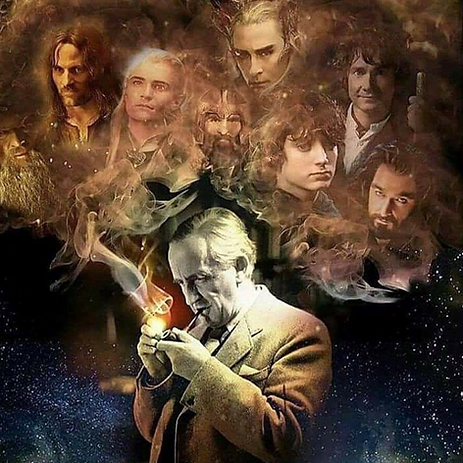
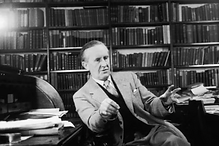
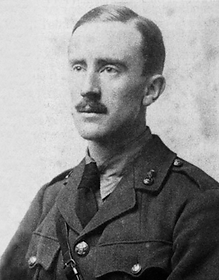
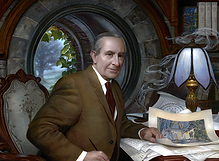
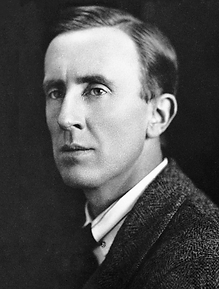
John Ronald Reuel Tolkien, born on January 3, 1892, in Bloemfontein, South Africa, was an English writer, philologist, and academic renowned for his high-fantasy works, The Hobbit and The Lord of the Rings trilogy.
Encyclopedia Britannica
Early Life and Education
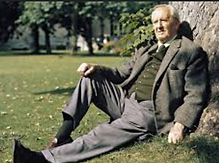
After his father's death in 1896, Tolkien's mother, Mabel, relocated the family to England, settling in Birmingham. She homeschooled Tolkien, introducing him to languages and literature, which sparked his lifelong passion for philology. Following her death in 1904, Tolkien and his brother were placed under the guardianship of a Catholic priest, Father Francis Morgan.
Tolkien attended King Edward's School in Birmingham and later Exeter College, Oxford, where he studied Classics before switching to English Language and Literature, graduating with first-class honors in 1915.
World War I and Academic Career
During World War I, Tolkien served as a second lieutenant in the British Army, experiencing the Battle of the Somme. The harrowing experiences of war profoundly influenced his later writings. After the war, he joined the Oxford English Dictionary project and later became a professor at the University of Leeds. In 1925, he returned to Oxford as a professor of Anglo-Saxon, a position he held until 1945, after which he became the Merton Professor of English Language and Literature until his retirement in 1959.
Literary Contributions
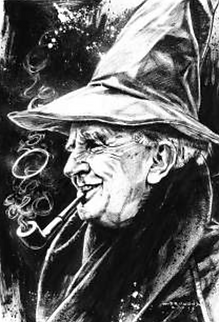
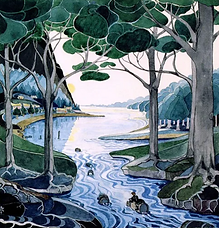
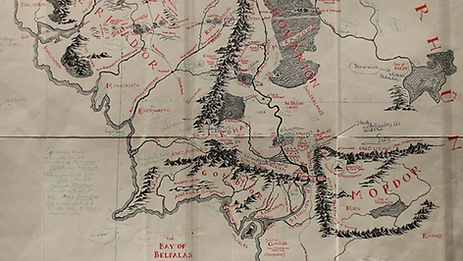
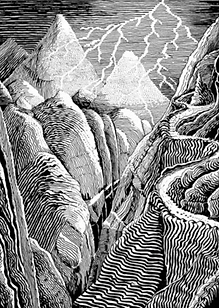
Tolkien's academic background in philology and mythology significantly influenced his creative works. In 1937, he published The Hobbit, a children's fantasy novel that introduced readers to Middle-earth. The book's success led to the more complex and expansive The Lord of the Rings trilogy, published between 1954 and 1955. These works are celebrated for their intricate world-building, deep mythological roots, and complex languages, all products of Tolkien's scholarly expertise.
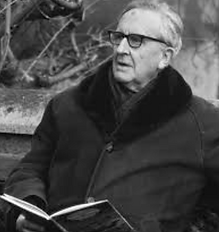
Personal Life
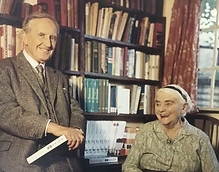
Tolkien married Edith Bratt in 1916, and they had four children: John, Michael, Christopher, and Priscilla. His deep Catholic faith and love for his family were central to his life. After Edith's passing in 1971, Tolkien's health declined, and he died on September 2, 1973, in Bournemouth, England.
Tolkien Estate
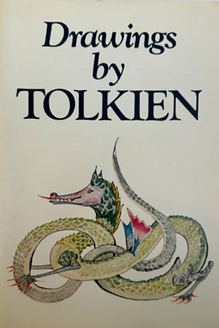
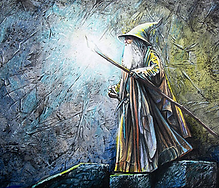
Legacy
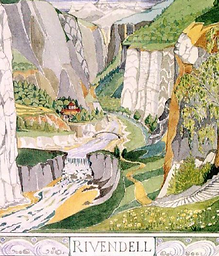
Tolkien's works have left an indelible mark on modern fantasy literature, inspiring countless authors and adaptations. His meticulous creation of Middle-earth, complete with its own histories, languages, and cultures, set a new standard for world-building in fiction. Posthumously, many of his unpublished works, including The Silmarillion, were edited and released by his son Christopher, further enriching the lore of Middle-earth.
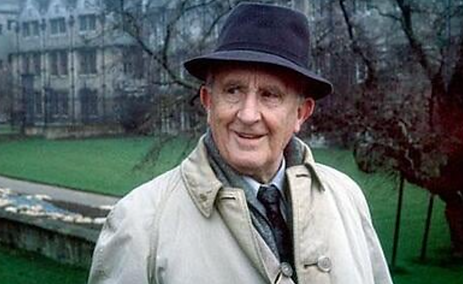
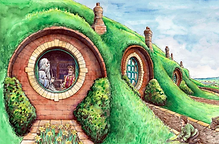
J.R.R. Tolkien’s work stands apart because he didn’t just write stories—he built an entire mythology. Few authors have matched the depth, complexity, and originality of his creations, and there are several reasons why his work remains unparalleled:


While many authors, like George R.R. Martin (A Song of Ice and Fire)
and Ursula K. Le Guin (Earthsea), have created incredible worlds, none have matched Tolkien’s mythic scope and scholarly depth, which makes him truly one of a kind.
-fotor-bg-remover-20251210165637.webp)


