-fotor-bg-remover-20251211141935.webp)
-fotor-bg-remover-20251211143525.webp)
Say you want to use someone else’s copyrighted photograph in your blog or Instagram post. Is that “Fair Use” or copyright infringement? The answer is, it depends on the nature of the use, and the purpose of the use.
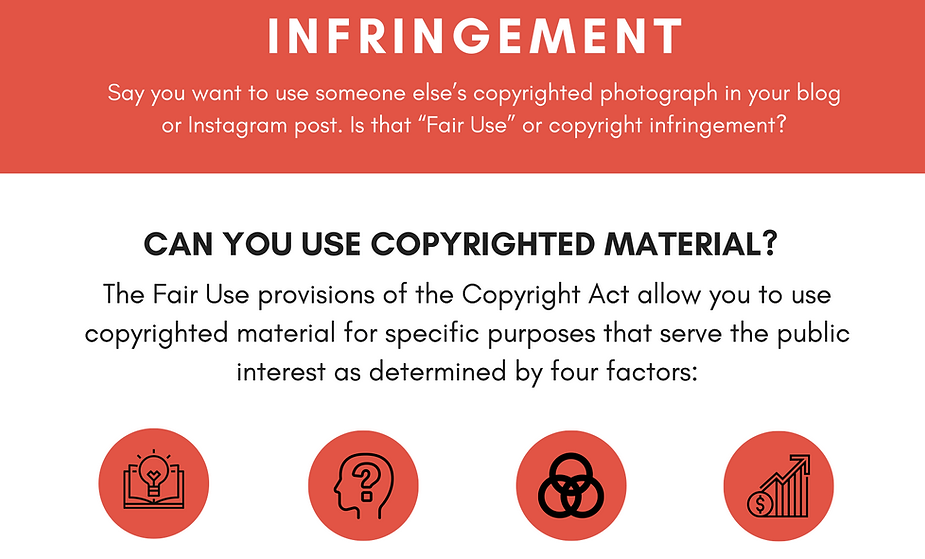
The Fair Use provisions of the Copyright Act allow you to copy and use copyrighted material for specific purposes — including criticism, comment, news reporting, teaching, scholarship, or research — that serve the public interest as determined by four factors:
Often, determining Fair Use is a no-brainer. If you’re writing a book review, you need to quote from the book in question in order to comment upon it. As a result, you have transformed the original copyrighted work into a new work in your book review.
Similarly, educational institutions can use photocopies of copyrighted work for students enrolled in a class, so long as the copying is limited to:
There are limits to how much of a work can be copied for educational purposes. You also can’t use these photocopies as a substitute for required texts. In addition, you can’t charge for the photocopied work (except to recoup the costs of photocopying), and use of the copies by students cannot be mandatory.
In cases like these, Fair Use seems simple enough. They have served the public interest and have not harmed the market for the original work. In fact, book reviews and book excerpts often increase sales of the original work by publicizing them.
But sometimes Fair Use is harder to judge. In a major 1973 Supreme Court case, the justices decided that even though copying and distributing medical journal articles for free to nonprofit government research libraries reduced sales to the journals’ publishers, the benefit to the public outweighed the harm to their business.
There are also times when determining Fair Use is a real head-scratcher. Take the case of New York “appropriation artist” Richard Prince whose work consists of taking the work of others, modifying it in some way, and then selling it — often for hundreds of thousands of dollars. As you might imagine, he’s had several run-ins with copyright law in the past. In 2015, he was sued for adding a few emojis at the bottom of other people’s Instagram posts, taking screen-grabs, blowing them up in size, and then selling them for up to $100,000.
Does adding a few emojis to someone else’s Instagram post pass the “transformation” test required for Fair Use, or is the only transformation here one that turns the original poster’s creative work into Richard Prince’s profit? What do you think?
POPOLOGY® Is An Automated Fair Use Digital Rights License, TRADEMARK Platform and Education for the use of measuring true popular in the masses.
-fotor-bg-remover-20251210165637.webp)


